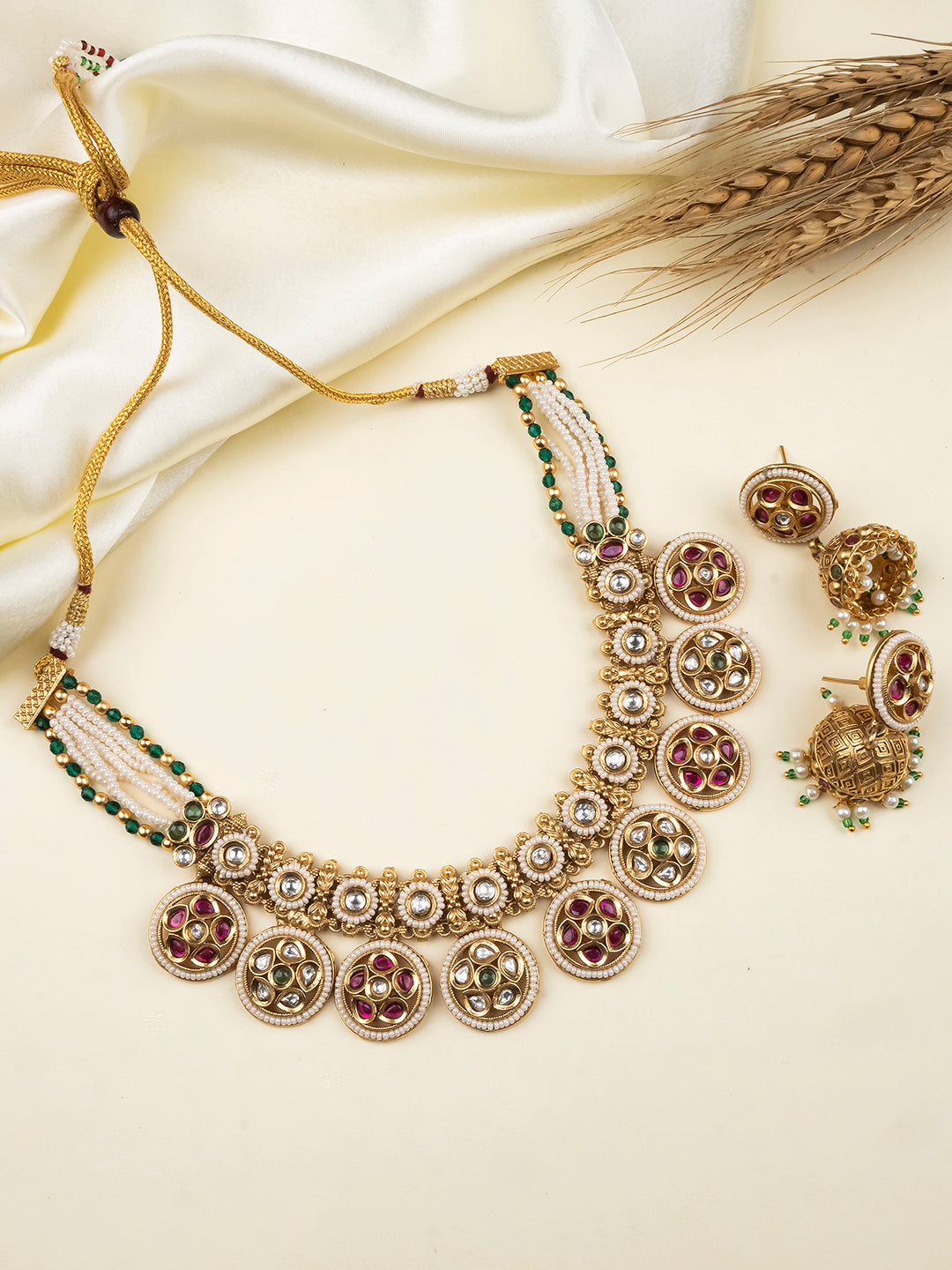

Rajwadi Jewellery vs Kundan Jewellery Difference: The Ultimate Buyer's Guide
The Quick Answer: The core Rajwadi jewellery vs Kundan jewellery difference lies in classification. Kundan is a centuries-old crafting technique of setting stones in pure gold foil, whereas Rajwadi is a design style representing a royal, antique Rajasthani aesthetic. Because one is a technique and the other is a style, a single piece of jewelry can be both—for example, a Kundan choker designed in a Rajwadi antique style.
The Core Technical Difference: Rajwadi vs. Kundan vs. Polki
To clear up the confusion, we must look at the technical classification of each term. In traditional Indian jewellery-making, terms represent either a material (the stone or metal), a setting technique (how the stones are secured), or an aesthetic style (the overall look).

What is Kundan Jewellery? (The Setting Technique)
Kundan is not a stone or a metal alloy; it is a traditional stone-setting technique that dates back to the Mughal and Rajput courts of the 16th century.
The Process: The word Kundan itself means "highly refined, pure gold." In this technique, artisans take a gold or silver frame in today's scenario they take copper or brass frame, place gemstones or glass pieces into the cavities using a natural adhesive resin called lac, and then pack layers of extremely pure, soft 24-karat gold foil around the edges of the stones at room temperature.
The Finish: Because the gold foil is pressed manually around the stones, they sit flush with the metal, creating a smooth, seamless surface. The reverse side of authentic Kundan jewelry is traditionally adorned with detailed Meenakari (colorful vitreous enamel work).
What is Polki Jewellery? (The Raw Stone)
To understand the broader picture, we must examine the Rajwadi Jewellery vs Polki Jewellery difference.
The Material: Unlike Kundan (which refers to a setting), Polki refers specifically to a type of stone: raw, uncut, unpolished natural diamonds.
The Connection: Polki stones are set into jewellery using the exact same Kundan setting technique (using pure gold foil and lac resin). Therefore, Polki jewelry is technically a premium, diamond-set version of Kundan work. Because Polki uses real, mined diamonds in their natural, organic state, it possesses a soft, deep luster that is distinct from the structured shine of modern brilliant-cut diamonds.
What is Rajwadi Jewellery? (The Design Aesthetic)
Unlike the other two terms, Rajwadi refers to an aesthetic style and theme, not a technical craft method.
The Aesthetic: Derived from Rajwada (meaning royal palace or estate), the Rajwadi style is designed to evoke the heavy, opulent, and antique appearance of ornaments worn by Indian royalty—particularly the Rajput clans of Rajasthan and the Maratha Peshwas of Maharashtra.
Key Features: Rajwadi pieces are characterized by a matte or darkened "antique" gold finish, detailed metal engravings, and motifs inspired by nature, temple carvings, and court life (peacocks, elephants, lotuses).
To know about Rajwadi jewellery's meaning and history, read our guide Rajwadi Jewellery: Meaning, Rich Royal History, Regional Styles & Authenticity Guide
The Crucial Nuance: A Piece Can Be Both!
Because Kundan is a setting method and Rajwadi is an aesthetic style, they are not mutually exclusive. A piece of jewelry can be both Rajwadi and Kundan.
For instance, a jeweller can craft a bridal necklace using the traditional Kundan technique (setting glass stones in gold foil) but polish the gold to a dull, matte antique finish and incorporate large, traditional Rajasthani motifs. This piece is marketed as Rajwadi Kundan.
Similarly, if a jeweller sets uncut raw diamonds (Polki) into an antique, heavy royal frame, the piece represents a Rajwadi Polki set.
Side-by-Side Comparison: Rajwadi vs. Kundan vs. Polki
The following table provides a direct, technical comparison of the three classifications:
|
Parameters |
Rajwadi Jewellery |
Kundan Jewellery |
Poliki Jewellery |
|
Classification |
Design Aesthtic/Style |
Setting Technique |
Material (Uncut Diamond) |
|
Primiary Stone |
Glass, Semi-precious or Polki |
Glass Slabs or Gemstones |
Raw, Uncut, Natural Diamonds |
|
Setting Method |
Varies (Often Uses Kundan or Jadau) |
Pressed 24k gold foil (Kundan) |
Pressed 24k gold foil (Kundan setting) |
|
Metal Finish |
Antique, dull, matte or oxidised gold |
Polished, bright yellow gold or silver |
Polished gold with silver foil backing |
|
Reverse Side |
Engraved Metal or basic Meenakari |
Intricate, colourful Meenakari enamel |
High-detail Meenakari or gold carving |
|
Resale Value |
Depends on Metal (high in gold, zero in brass) |
Moderate (based on gold weight only) |
High (based on gold weight + diamonds) |
|
Best Suited For |
Royal bridal looks, traditional state wear |
Festival, sangeet versatile wedding wear |
Bridal main day, luxury heirloom investment |
Price Analysis: Rajwadi Jewellery vs. Polki Price Comparison
When planning a wedding budget, understanding the financial difference between these options is vital. The pricing spectrum is wide, primarily determined by whether the base metal is real gold/silver or an imitation alloy, and whether the stones are natural diamonds or glass.
Here is a realistic Rajwadi Jewellery vs Polki Price comparison for bridal necklace sets in the modern Indian market:

Bridal Decision Framework: Which is Better for Your Wedding?
If you are a bride deciding: Rajwadi vs Kundan jewellery which is better for bride, use this step-by-step decision framework based on your specific wedding context.

Scenario A: You Want a Royal, Antique Theme
The Recommendation: Go for Rajwadi Kundan or Rajwadi Polki.
Why: If your lehenga features heavy zari work, deep traditional colors (crimson, royal blue, emerald green), and you want to look like royalty, the matte, detailed metal carvings of the Rajwadi style are essential. Pair a heavy choker with a long Rani Haar to create a layered, majestic look.
Scenario B: You Want a Modern, Colorful, or Pastel Theme
The Recommendation: Go for **Kundan Jewellery** (with a bright gold finish).
Why: If your wedding outfit is a modern pastel pink, ivory, or lavender, the heavy, dark-toned metal of Rajwadi jewellery can clash. Bright, polished Kundan with colored gemstone drops (like pink tourmalines or mint-green beads) complements modern bridal palettes beautifully and reflects camera flashes cleanly.
Scenario C: You are Working with a Strict Budget
The Recommendation: Go for Silver-based Kundan or High-quality Brass Rajwadi.
Why: You can allocate your budget to other wedding arrangements while still achieving a stunning bridal look. High-quality brass sets with micro-gold plating look identical to real gold on camera and carry zero security risk during travel.
Frequently Asked Questions (FAQ)
Q1: What is the main Rajwadi jewellery vs Kundan jewellery difference?
The main difference is that Kundan refers to the specific technique of setting stones in pure gold foil, whereas Rajwadi refers to the aesthetic style of the jewellery, characterized by an antique, matte gold finish and royal Rajasthani motifs.
Q2: What is the Rajwadi Jewellery vs Polki Jewellery difference?
Polki refers to the type of stone used—specifically raw, uncut, unpolished natural diamonds. **Rajwadi** refers to the overall design style (royal, antique). Polki diamonds are set using the Kundan setting technique and can be styled in a Rajwadi antique frame.
Q3: Rajwadi vs Kundan jewellery: which is better for bride?
It depends on your wedding theme. A Rajwadi style (often combining Kundan or Polki) is better for a traditional, grand royal bridal look. A polished Kundan style is better for versatile, colorful, or modern pastel-themed wedding outfits.
Q4: Is Polki more expensive than Kundan?
Yes, Polki is significantly more expensive because it uses real, natural uncut diamonds. Kundan typically uses glass stones (ghat) or semi-precious gems, which carry little to no resale value.
Q5: Can a piece of jewelry be both Rajwadi and Kundan?
Yes. Since Kundan is a setting method and Rajwadi is an aesthetic style, they frequently overlap. A piece constructed using the Kundan foil setting method with an antique finish and royal motifs is called a Rajwadi Kundan piece.
Q6: How do I store Kundan and Rajwadi jewelry to prevent damage?
Store them in dry, airtight plastic containers, wrapped in soft cotton or muslin cloth. Keep them away from moisture, perfumes, and direct heat. Avoid velvet boxes, as the chemicals in some velvet materials can tarnish the delicate gold foil.
Conclusion
Understanding the difference between Rajwadi, Kundan, and Polki jewellery empowers you to make an informed, confident purchase. Whether you choose the unmatched prestige of real Polki diamonds, the timeless and colorful appeal of classic gold Kundan, or the affordable drama of an antique-plated Rajwadi set, you are participating in a rich history of Indian jewelry craft.
Are you planning your bridal look or searching for the perfect festive accessories? Explore our exclusive collections of authentic and high-quality imitation Rajwadi jewellery at StileAdda to find your dream heritage piece today!
Tags: