
Rajwadi Jewellery: Meaning, Rich Royal History, Regional Styles & Authenticity Guide
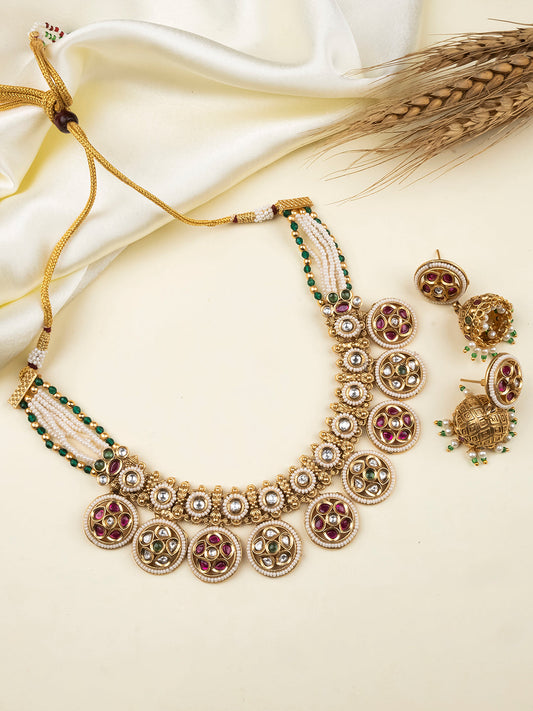
When you look at a bride adorned in a heavy, rectangular choker that catches the light with uncut diamonds and red-green enamel, or when you notice the Borla resting gracefully on her forehead, you are not just looking at ornaments. You are witnessing centuries of imperial heritage. This is the world of Rajwadi jewellery — a style that has captured the imagination of modern brides, fashion designers, and heritage collectors alike.
What is Rajwadi Jewellery?
To understand Rajwadi jewellery meaning and history, we must start with the linguistic and cultural roots of the word. The term "Rajwadi" (sometimes spelled Rajwada) literally translates to "belonging to a royal estate, palace, or kingdom" in Rajasthani and Hindi dialects.
Therefore, Rajwadi jewellery is not defined by a single gem-setting technique or metal. Instead, it refers to a design aesthetic and style characterized by antique gold finishes, heavy structural arrangements, natural and imperial motifs, and detailed enamelling that reflects the grandeur of Indian royalty.
The Real History And Origin of Rajwadi Jewellery
To appreciate these ornaments, we must anchor them to documented centuries, specific ruling dynasties, and historical trade routes. The evolution of Rajwadi jewellery can be divided into four distinct historical phases.
1. The Early Roots: 8th to 12th Century Medieval Dynasties:
Before the refinement of modern gem-setting, early Rajput dynasties — such as the Gurjara-Pratihara dynasty (which ruled Western India from the 8th to the 11th centuries) and the Chahamanas of Shakambhari (the Chauhans) — laid the foundation for royal Indian jewellery.
During this medieval period, jewellery was heavy, structural, and fabricated from solid sheets of gold and silver. Ornaments were deeply influenced by temple architecture and local folklore. The motifs were symbolic: the sun (Surya) for the Suryavanshi Rajputs, the crescent moon (Chandra) for the Chandravanshi clans, and native flora. The primary technique was hammering metal sheet to create hollow, lightweight yet massive-looking pieces.
2. The Mughal-Rajput Synthesis: 16th to 17th Century Renaissance
The golden age of what we now identify as Rajwadi craftsmanship began in the late 16th century, driven by the political and cultural alliances between the Rajput courts and the Mughal Empire.
The pivotal figure in this revolution was Raja Man Singh I of Amber (who ruled from 1589 to 1614). Man Singh was fascinated by the Persian enamelling techniques flourishing in Lahore. In around 16th century, he invited few master enamelers (meenakars) from Lahore to settle in his capital of Amber (near modern-day Jaipur).
These Lahore craftsmen merged their Persian techniques with the indigenous Rajput goldwork, creating two defining methods:
Meenakari: The art of engraving gold and filling the grooves with colored glass powder (red, green, blue), which is then fired in a kiln to create a glossy, enamel finish. Traditionally, the back of a piece was decorated with Meenakari so it was as beautiful as the front.
Kundan: The process of setting gemstones (often rock crystal or glass) in a gold frame by packing extremely pure, refined gold foil (Kundan) around the edges of the stone at room temperature, without using solder.
When Maharaja Sawai Jai Singh II founded the planned city of Jaipur in 1727, he dedicated specific quarters (Johri Bazar) to these jewelers, establishing Jaipur as the global epicentre of Rajwadi and Jadau craft.
3. The Western Expansion: 18th Century Maratha & Gujarati Influence
As the Mughal Empire declined in the 18th century, power shifted to the Maratha Empire and the independent princely states of Gujarat. This period introduced fresh regional variations:
The Peshwa Influence (Maharashtra): The prime ministers (Peshwas) of the Maratha Empire, operating from their seat in Pune (Shaniwar Wada), developed a distinct royal style. Rather than relying heavily on Jaipur-style stone-setting, the Peshwai court favoured combinations of high-grade gold beads and natural pearls, combined with deep-red rubies.
The Kutch Solanki & Jadeja Lineage (Gujarat): In the arid regions of Kutch, local artisans under the patronage of the Jadeja Rajputs adapted royal styles to create Pachchikam. Kutch silversmiths designed the ornament-setting. Because gold was scarce in the region, they used malleable silver as a base to encase glass and semi-precious stones, giving Gujarati Rajwadi jewellery a rustic, shimmery, and distinct look.
4. The Colonial Confluence: 19th to 20th Century Maharaja Era
Under the British Raj, the Maharajas of Marwar (Jodhpur), Patiala, and Baroda travelled extensively to Europe. By the early 20th century, these royals began commissioning legendary European jewellery houses like Cartier and Boucheron to reset their ancestral state treasuries.
This created a fascinating fusion: traditional Indian gemstones (carved emeralds, spinels, and natural pearls) were reset into platinum using European Art Deco geometries. This era introduced the multi-layered drape necklaces and the use of platinum/white gold to the Rajwadi repertoire, influencing the bridal neckwear we see today.
What is Rajwadi Jewellery Made Of? Gold vs Artificial Metal
The answer depends entirely on your budget, usage, and whether you are buying heirloom jewellery or fashion accessories.
1. Traditional/Authentic Rajwadi Jewellery
Genuine, heritage-grade Rajwadi jewellery is a high-value investment made from premium, authentic materials:
The Base Metal: Traditionally crafted in 22-karat gold(91.6% purity) or 18-karat gold (75% purity). 18-karat gold is often preferred for heavy stone-set pieces because it is harder and holds gemstones more securely than soft 22-karat gold.
The Gemstones: Authentic pieces feature natural, untreated gemstones such as Polki or precious stones.
The Backing: Pure silver foil is placed behind the gemstones to reflect light, and the reverse side is coated in 24-karat gold-based Meenakari enamel.
2. Modern Fashion/Artificial Rajwadi Jewellery
Because authentic gold Rajwadi sets can cost anywhere from several lakhs to crores of rupees, a thriving market for high-quality imitation jewellery has emerged.
The Base Metal: Artificial Rajwadi jewellery is typically made of copper, brass, or zinc alloys. Copper and brass are preferred because they are highly malleable, allowing machine moulds to mimic the intricate hand-carving of royal artisans.
The Plating: To achieve the signature look, these base metals are electroplated with a micro-layer of gold. They are then treated with a chemical wash to create an antique matte or oxidized finish. This dull gold look mimics the natural patina that gold develops over decades.
The Stones: Real diamonds are replaced with Kundan glass slabs, high-grade cubic zirconia (AD stones), or synthetic colored glass. Fresh-water pearls or plastic beads replace natural sea pearls.
Can Rajwadi Jewellery Be Worn Daily or Only on Weddings?
1. The Bridal and Ceremonial Statement (Weddings & Festivals)
Heavy Rajwadi pieces—such as the full Aad choker, multi-tiered Rani Haars, Sheeshphool (hair bands), and thick Kadas (bangles)—are highly formal. They are designed to complement heavy silk sarees (like Kanjeevarams or Paithanis) and bridal lehengas. Wearing these to the office or a casual gathering can look out of place and can be physically uncomfortable due to their weight.
2. Contemporary Styling: Light and Daily Wear Ornaments
To make the Rajwadi style wearable for daily life, look for modern, minimal adaptations:
Earrings: Instead of heavy, multi-tiered shoulder-dusters, opt for medium-sized Rajwadi Jhumkas or Chaandbalis featuring an antique gold finish. These pair beautifully with simple kurtas, linen sarees, or even Indo-Western tunic dresses.
Bangles: A single, thick Rajwadi Kada with floral engravings or a simple lion-head terminal (Makar Kada) can serve as a statement cuff worn with a watch or on its own.
Pendants: A small, single-stone Kundan pendant on a thin gold chain offers a subtle touch of heritage that can easily be worn to the office.
Frequently Asked Questions
Q1: What does the term "Rajwadi" mean in jewellery?
The term Rajwadi refers to a royal, antique-style Indian design aesthetic inspired by the jewellery traditions of the historic royal courts (*Rajwadas*) of Rajasthan, Gujarat, and Maharashtra. It is characterised by heavy patterns, antique gold finishes, and traditional gem-setting techniques.
Q2: What is the main difference between Rajwadi and Rajputi jewellery?
Rajputi jewellery refers specifically to the cultural ornaments traditional to the Rajput community of Rajasthan (like the Aad and Borla). Rajwadi jewellery is a broader, modern retail term that includes Rajputi styles alongside other royal Indian traditions, such as the pearl-heavy Peshwai style of Maharashtra.
Q3: What is Rajwadi jewellery made of?
Authentic Rajwadi jewellery is made from 18K or 22K gold, decorated with natural gemstones like uncut diamonds (Polki), rubies, emeralds, and real pearls, with a Meenakari enamel backing. Affordable fashion variants are made from copper or brass electroplated with a micro-layer of gold and finished with an antique wash.
Q4: Can I wear Rajwadi jewellery every day?
Heavy Rajwadi necklaces and bridal sets are best reserved for weddings, festivals, and formal family gatherings. However, you can wear simplified, lighter Rajwadi ornaments — such as medium-sized antique gold jhumkas, single-line bangles (kadas), or simple Kundan pendants — as part of your daily or office wear.
Q5: Is Rajwadi jewellery the same as Kundan jewellery?
No. Kundan refers specifically to a stone-setting technique, while Rajwadi refers to a broader design style that often includes Kundan work alongside layered gold and Meenakari detailing.
Q6: Why is Rajwadi jewellery finished with an antique look?
The antique finish (often a matte, slightly darkened gold look) is designed to mimic the natural oxidation and patina that precious gold jewellery develops over decades. This finish gives the pieces a vintage, heritage-rich appearance that highlights the intricate details of the metal engravings.
Conclusion
Rajwadi jewellery isn't just another catalog label — it's a design language rooted in centuries of Rajasthani royal craftsmanship, still being reinterpreted for modern Indian weddings and festivities today. Whether you're drawn to a solid gold heirloom set or a lighter artificial piece for your next Navratri outfit, understanding what makes a piece genuinely "Rajwadi" helps you shop with more confidence and appreciate the heritage behind it.
Ready to explore the style for yourself? Browse our jewellery collection to find pieces ranging from necklaces to chokers and long necklace sets — and if you're still deciding between Rajwadi and other traditional styles like temple or Kundan, our detailed comparison guide can help you choose the right fit for your occasion.
Culturally Anchored Sources
To ground this guide in real cultural history rather than generic brand claims, here's the broader context behind the crafts Rajwadi jewellery draws on:
1. The Amber/Jaipur Craft Settlement: Jaipur's Meenakari tradition is widely linked to Raja Man Singh I of Amber, who is credited with bringing master enamellers from Lahore to Rajasthan in the 16th century — a story preserved in the broader royal history of the Kachwaha dynasty and reflected in the City Palace Museum's collections in Jaipur today.
2. Formal Recognition of Rajasthani Craft Techniques: Rajasthan's jewellery heritage is taken seriously enough to have earned formal legal protection — Thewa jewellery, for instance, holds an official Geographical Indication (GI) tag recognised by India's Intellectual Property Office, underlining how deeply documented and protected the region's traditional techniques are.
3. Maratha Royal Jewellery Traditions: Beyond Rajasthan, the broader "royal Indian jewellery" story includes traditions like the pearl-heavy Peshwai style of Maharashtra's Maratha courts, historically associated with fine gold work and imported Basra pearls for royal households.
4. Museum-Preserved Mughal-Rajput Ornaments: Collections such as the National Museum, New Delhi's decorative arts gallery house jewellery from the Mughal-Rajput era, including pieces in the Aad, Borla, and enamelled Kundan traditions that continue to inspire Rajwadi designs today.
Tags: